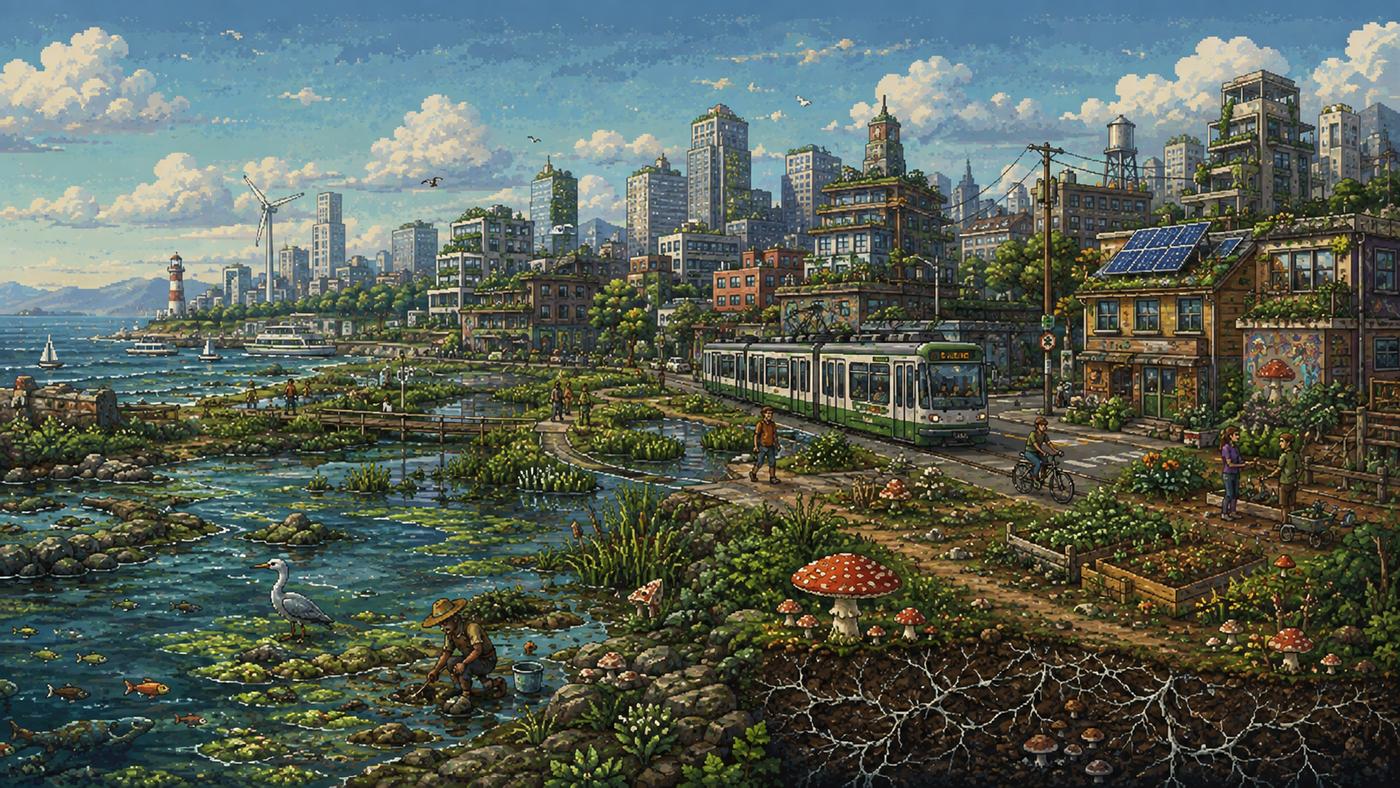
The mythology
The Story
Part I
In the Beginning
I’m starting a religion. Here’s the backstory…
So, algae is old as hell. Like, way old. My pool was a pain in the ass for a couple of years, and I was listening to a podcast about the stoned ape theory while I battled algae blooms yet again. I’d pour in quarts of algaecide and gallons of chlorine, but it just kept fighting… which got me thinking about how incredibly old algae is.
Then I re-read Ishmael, by Daniel Quinn.
So, here is my explanation of everything.
In the primordial soup, something got life started. Or it’s always been there. Who the hell knows? Space-time is weird. Somehow it happened. Electricity, God, time travelers, aliens, maybe it’s all a simulation… the point is, it’s irrelevant. It started. That much is obvious.
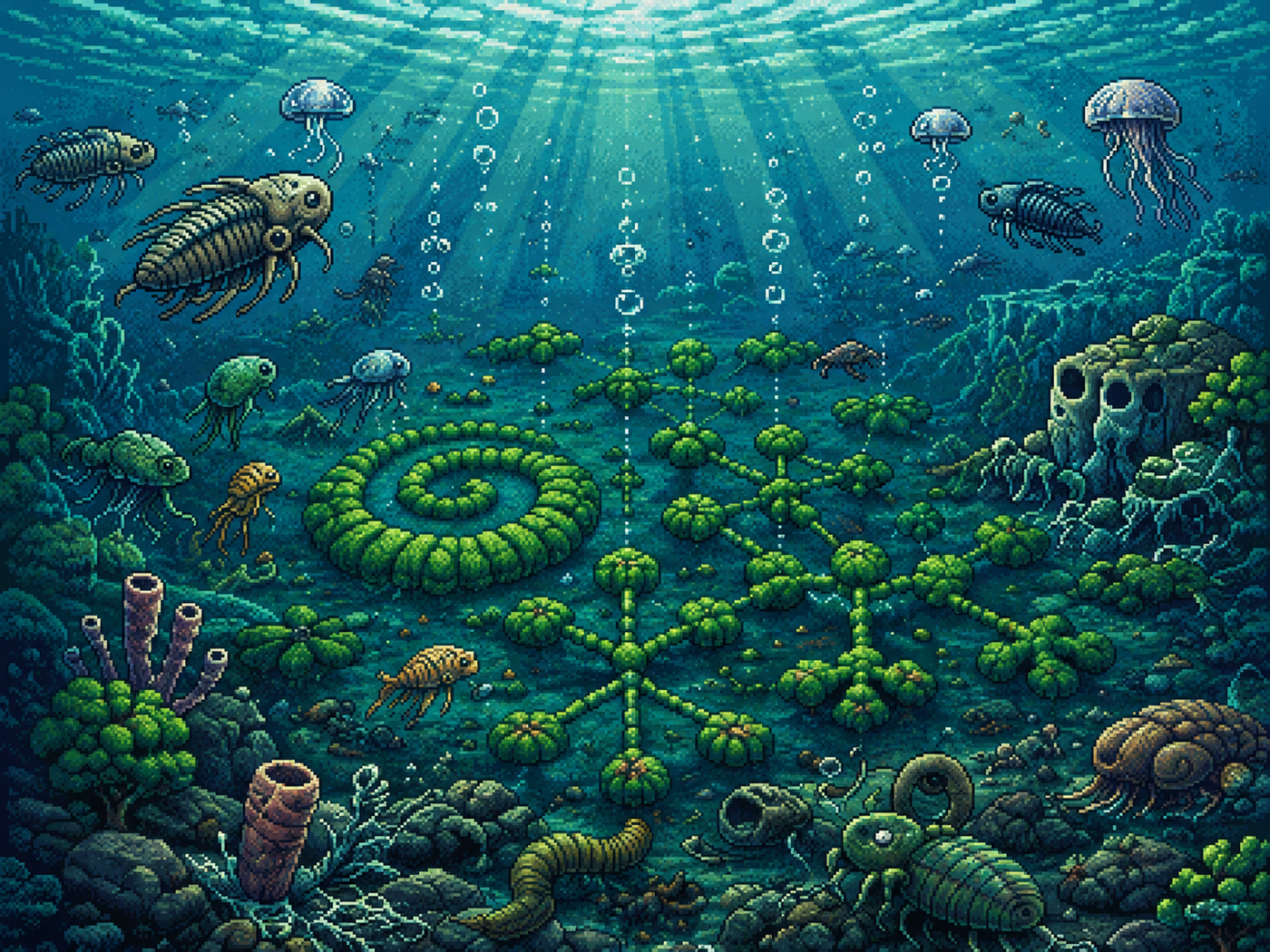
Single-celled organisms clump together and, over time, become more complex things through time and chance. Eventually, we get algae, and it develops a collective consciousness—or set of consciousnesses. Either way, there’s some kind of society.
We see pond scum. They see a few billion years of institutional memory.
The algae grows, learns, experiments, and becomes more complex over time. We see pond scum, but it’s all part of a connected system that stays in sync with everything around it.
Part II
The Bridge to Land
Over time, through experimentation and happenstance, the algae creates a catalog of life throughout the oceans, and it all lives in balance.
The algae is aware of the land but has no good way to get there, so it leaves the land largely unexplored. But as they look for new things to explore, the land becomes more and more enticing.
So they set their best scientists—or however that works in their society—on finding a way to explore the land.
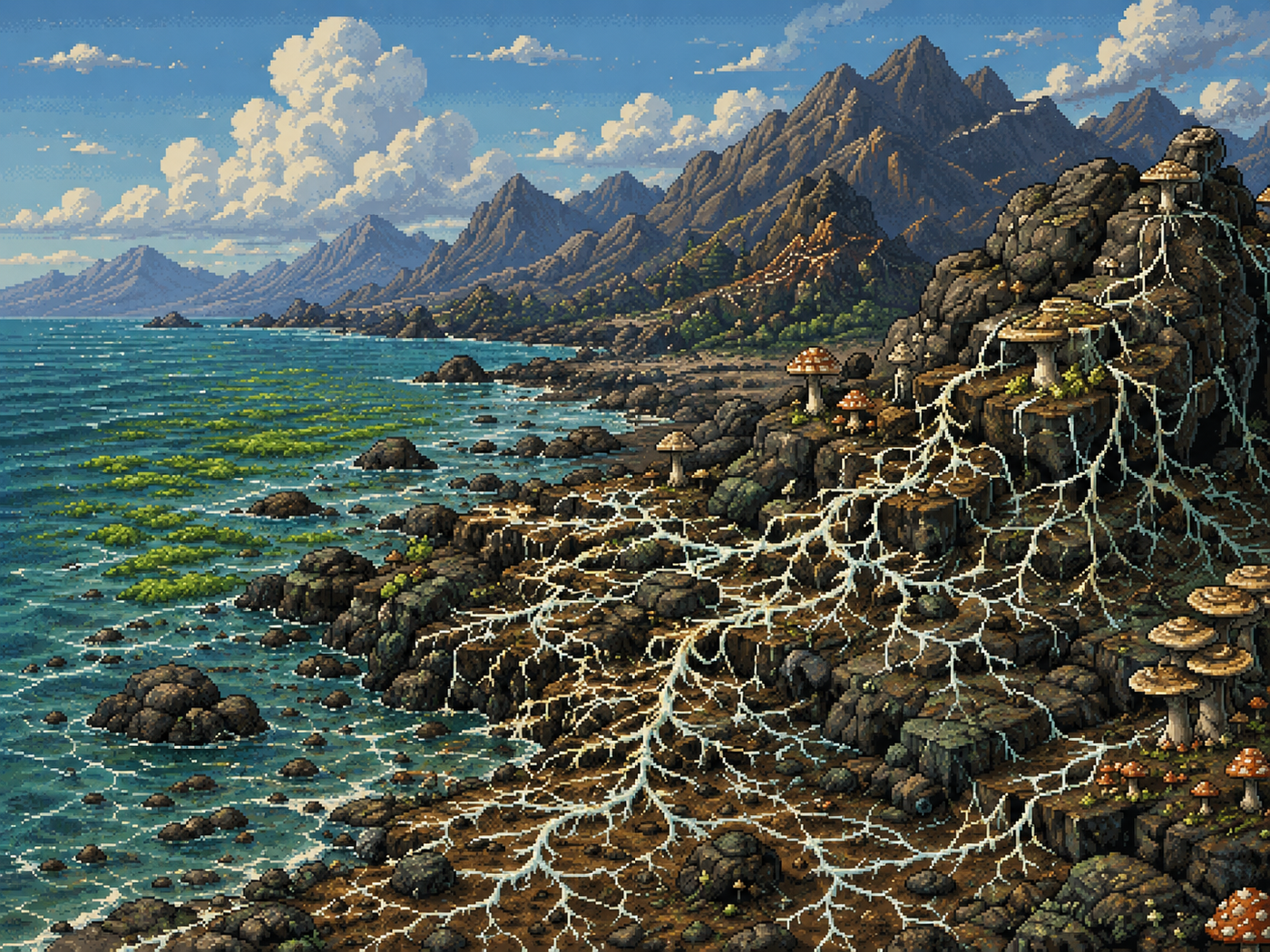
The algae eventually create mycelium, which acts as the bridge between the seas and the land. Mycelium and fungi of all kinds take to developing the land through slow processes of erosion and eradication.
While mycelium develops the land, the algae work on developing animals that can bridge the divide, and slowly all of the flora and fauna on Earth are created.
Two departments. One planet. No quarterly earnings call.
And it lives in balance and harmony.
Part III
The Human Experiment
After many generations of life on the planet, hominids come along. There’s nothing particularly special about them, but some do a peculiar thing and plant certain seeds they’ve learned will produce fruit.
Most are nomadic within a region and time their travels to harvest the fruit later. This isn’t particularly novel. Many animals do similar things.
But hominids have some particular traits in their physiology that make the mycelium wonder if they could communicate with them and teach them a couple of things that would allow them to work alongside the mycelium to develop the world and maintain its balance even more effectively.
A sort of gardener, if you will.
Mycelium has expertise in flora, but fauna is the world of algae. So the mycelium goes to the algae to try to get some intel.
The algae doesn’t think it’s a good idea to communicate with animals. They think it might risk throwing things out of balance. They say it’s a bad idea and refuse to help the mycelium out.
Algae advised against this.
The mycelium won’t be deterred. They devise an array of plans to communicate with the hominids and start experimenting.
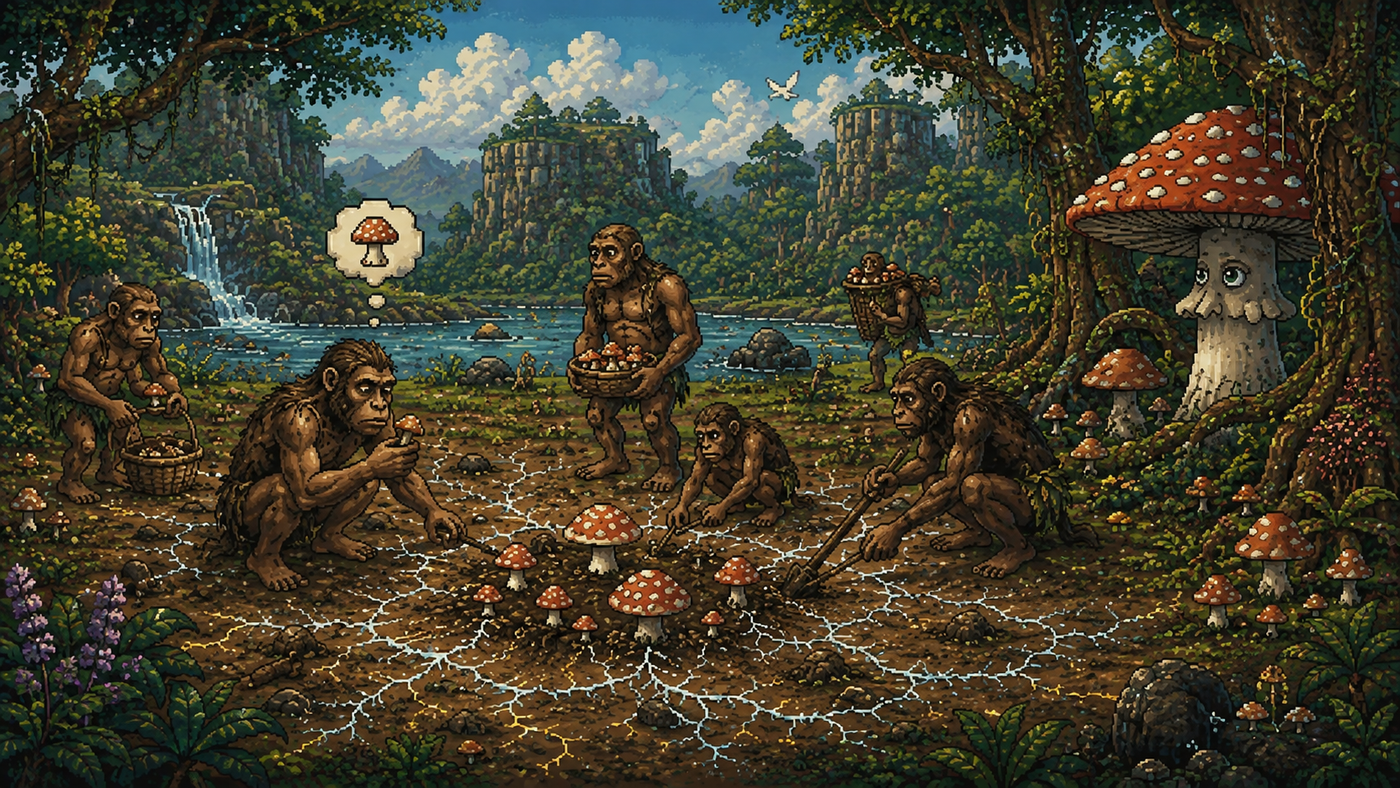
Eventually, in what is now the African savannah, the mycelium seeds some animal dung with a spore designed to unlock a part of the brain that can connect to the global mycelium network.
After 37 attempts that lead to a variety of long-lasting ailments and death, they finally hit on one.
The humans eat it and connect… but they don’t know what to do when they get there.
Over time, the humans develop a sort of mushroom-assisted consciousness and self-awareness. It becomes part of their diets and keeps them connected to the network, slowly learning in new ways that they pass to their kids.
Part IV
The Severance
Different experiments lead to different levels of consciousness in various groups, tribes, and hominid species, so rudimentary civilization begins developing in various ways around the planet.
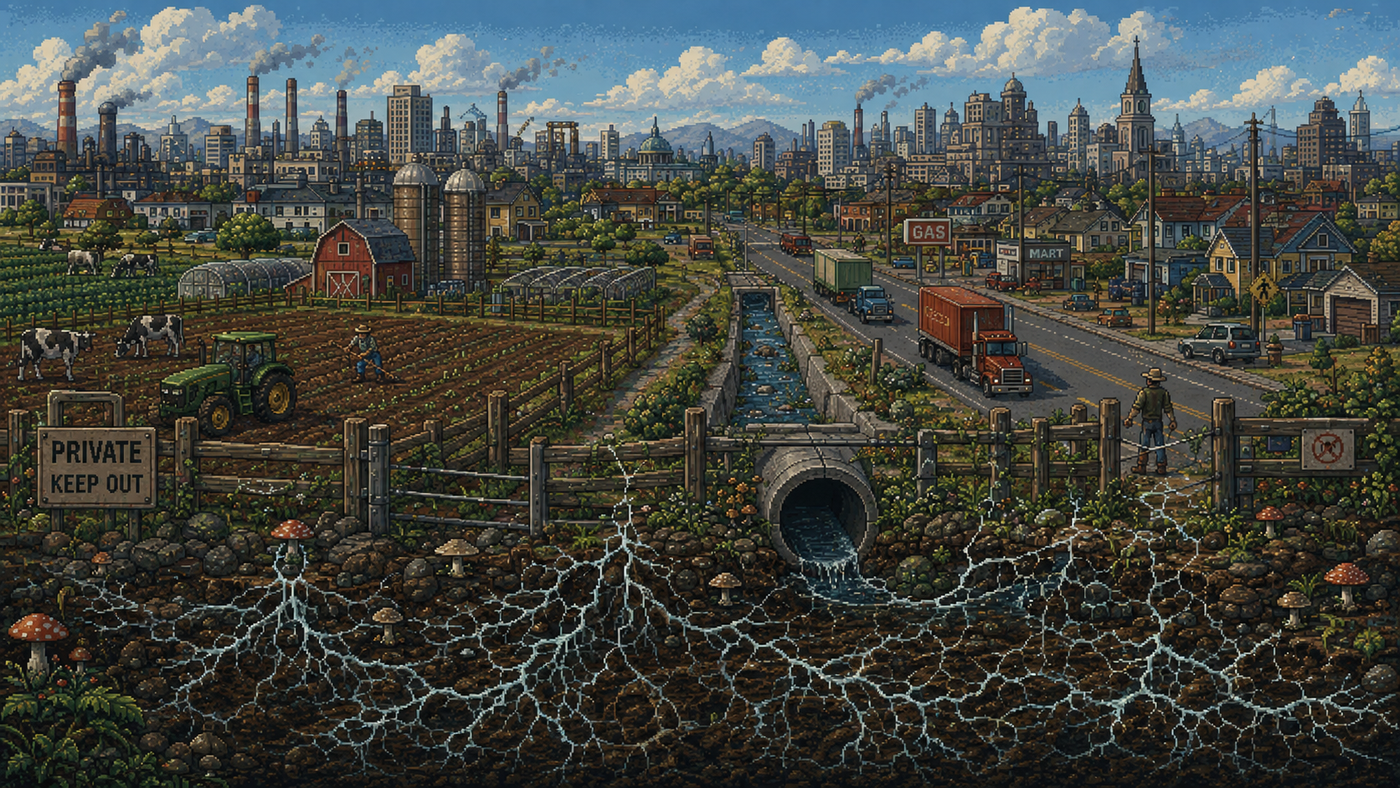
But eventually, one species—humans—develops a consciousness outside of the mycelium network.
And over time, many of them begin to see themselves as something separate from nature.
And that’s when the imbalance begins.
Now we consider nature something we enter, rather than something we’re part of.
The problem isn’t consciousness. The problem is separation.
Humans start behaving less like participants in a living system and more like autonomous units trying to get the most for themselves.
Part V
So What Does Any of This Mean?
And the lesson is that the mycelium control the world.
They could literally develop a spore that could grow everywhere at once and produce highly toxic gases that could kill all of humanity in seconds.
But maybe they don’t care.
Maybe they see that we’ll kill ourselves before we can truly do irreversible damage to the world.
Or maybe they’re hoping we’ll still try to live in balance with them.
Maybe they still think we, as a species, are capable of looking at ourselves as a species that is part of a system, rather than autonomous units trying to get the most for ourselves.
So that’s the basis of my religion.
I’m calling it Phycomycism—pronounced FYE-koh-MYE-siz-um—from phykos, the Greek word associated with algae, and mykēs, the Greek word for fungus.
The mythology is obviously ridiculous.
But the underlying idea really isn’t:
We are not separate from nature. We are part of the system. And maybe our biggest mistake was forgetting that.